Local Citation Building Checklist: How to Get Your Business Listed Everywhere That Matters
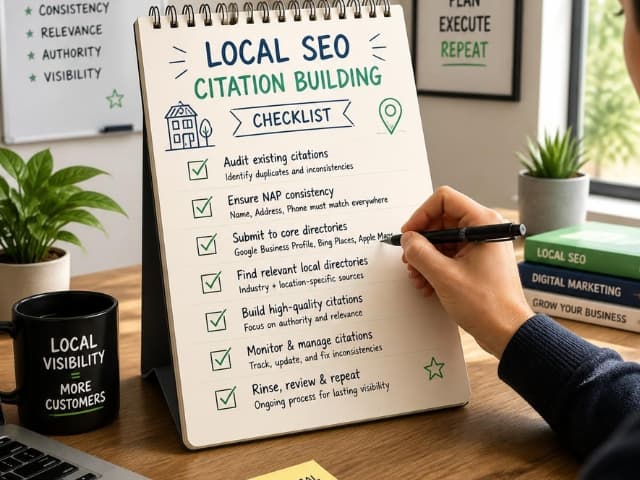
Title: Local Citation Building Checklist: How to Get Your Business Listed Everywhere That Matters
Focus keyphrase: local citation building checklist
Excerpt / meta description: Local citations are one of the strongest trust signals for Google, yet most small businesses stop after claiming three directories. Here is the full checklist, including the sources you already pay for and the ones competitors ignore.
A local citation is any online mention of your business name, address, and phone number. It does not need to link to your website. It just needs to be consistent and accurate across the web. When Google sees your business listed the same way on dozens of trusted sites, it becomes more confident that your business is real, active, and worth showing in local search results.
Most small business owners stop after claiming a Google Business Profile and maybe a Yelp page. They do not realize that their local competitors who rank above them often have 50 to 100 consistent citations built over time. The good news is that citation building is not complicated. It is repetitive, and most of it is free. Here is the complete local citation building checklist we use for clients.
Why Local Citations Matter for Rankings
Google uses citations as a trust signal. A business with consistent NAP data across many reputable directories sends a clear message that it is legitimate. A business with conflicting addresses, old phone numbers, or missing listings sends the opposite signal.
Citations also put your business in front of customers who search within those directories directly. Someone looking for a plumber on Angi or a roofer on HomeAdvisor will only find you if your profile exists there. Missing citations are not just an SEO problem. They are a lead generation problem.
There is also a compounding effect. Each citation reinforces the others. When a supplier directory lists your exact same business name, address, and phone number as your Google Business Profile, it confirms to Google that your information is accurate. The more consistent the data, the stronger the signal.
The Local Citation Building Checklist
Work through this list in order. The first section is the highest priority. The second section covers industry and local sources. The third section covers advanced and overlooked opportunities.
Section 1: Core Data Sources
These are the platforms Google actively monitors for business data. Get these right first.
Google Business Profile This is not just a citation. It is the foundation of your entire local search presence. Claim it, verify it, and fill out every field. Add your primary category, secondary categories, service areas, hours, photos, and a business description using your target keywords. Your name, address, and phone number here must match everywhere else exactly.
Facebook Business Page Facebook is still one of the most trusted citation sources. Create a business page if you do not have one. Fill out the about section, contact information, service area, and website link. Post regularly, even if it is just once a month. An active Facebook page reinforces that your business is real.
Apple Business Connect Many local searches happen on Apple Maps through iPhones. If you are not listed here, you are invisible to a large segment of mobile users. Claim your listing and add the same NAP data.
Bing Places Bing is smaller than Google but still relevant. Claiming your Bing Places listing is free and takes 20 minutes. Bing data also feeds into some voice search results and Windows-based devices.
Yelp Yelp is polarizing, but it ranks highly in Google for local searches. You do not need to buy ads. You need a complete, accurate listing with photos, services, and hours. If customers ask for reviews, Yelp is not the best place due to their filtering. Focus on getting listed, not on building reviews there.
Section 2: Major Directories and Data Aggregators
Data aggregators supply business information to hundreds of smaller directories, GPS systems, and apps. Getting listed with them amplifies your reach far beyond the individual platform.
Data Axle Formerly known as InfoGroup, Data Axle distributes business data to major search engines and directories. Submit your business through their free or paid options.
Foursquare Foursquare data powers location information for many apps and platforms. Claim your listing even if you think Foursquare is irrelevant. Its data flows into other services.
Neustar Localeze Another major aggregator that feeds business data to directories and mobile apps. A listing here helps ensure consistency across smaller platforms you have never heard of.
Better Business Bureau A BBB profile is a strong trust signal for older customers and service businesses. You do not need accreditation to be listed. A basic profile with accurate contact information is enough.
Chamber of Commerce Your local chamber is one of the most overlooked citations. It is a trusted local organization, and Google knows it. Most chambers offer an online member directory that includes a link to your website. This is one of the strongest local links you can get.
Yellow Pages and Superpages These directories are not what they once were, but they still feed data to other services. Claim your listing and correct any outdated information.
Section 3: Industry-Specific Directories
These are the directories specific to your trade. They often carry more weight than generic directories because they are trusted within your niche.
Home service businesses: Angi, HomeAdvisor, Thumbtack, Porch, and Houzz. Each one requires a separate profile. Fill them out completely and include photos of actual work.
Restaurants and food businesses: Google Food Ordering, OpenTable, Grubhub, DoorDash, and TripAdvisor. These are both citation sources and revenue channels.
Health and wellness businesses: Healthgrades, Zocdoc, Psychology Today, and Vitals. These require licensing information and carry high trust with Google.
Legal and professional services: Avvo, Justia, FindLaw, and Lawyers.com. Legal citations must be exact and consistent because legal directories have strict data standards.
Nonprofits: GuideStar, Charity Navigator, and GreatNonprofits. These are essential for donation-based organizations. Many donors check these platforms before giving.
Section 4: Local and Hyperlocal Sources
Local citations carry more weight for local search than national directories. Google wants to see that your business is embedded in your community.
Local news websites If your business has been mentioned in a local news story, ask the site to update the mention with a link to your website. If you have not been mentioned, pitch a story. Sponsorships, community work, and unique projects are all newsworthy angles.
Local blogs and neighborhood sites Many communities have active local blogs, neighborhood associations, or community Facebook groups. Some maintain business directories. Getting listed on a hyperlocal site is a strong signal.
Local government and economic development sites Some cities maintain directories of licensed contractors, registered businesses, or minority-owned businesses. Check your city and county websites for business registration directories.
Local sports and school sponsorships If you sponsor a youth sports team, a school event, or a community fundraiser, ask for a mention on their website. These are real local links from real organizations. They carry significant trust.
Business improvement districts If your business is in a downtown district or commercial corridor, there may be a business improvement district with a directory. Get listed. It is free and hyperlocal.
Section 5: Supplier, Manufacturer, and Partner Directories
These are the citations your competitors almost certainly ignore, which is why they are so valuable.
Supplier dealer locators If you install or service specific brands, you are likely eligible for their dealer locator. HVAC companies can get listed on Trane, Carrier, Rheem, and Lennox find-a-dealer pages. Plumbers can get listed on Kohler, Moen, and Rheem sites. Roofers can get listed on GAF, Owens Corning, and CertainTeed directories.
These listings are powerful because they come from authoritative, industry-specific websites. They also generate real leads from customers who want a certified installer for a specific brand.
Manufacturer certification directories Similar to supplier locators, certification directories confirm that you are trained and authorized to install or service a specific product. These listings often include your website link and service area.
Trade association member directories Whatever your industry, there is a trade association with a member directory. HVAC has ACCA. Roofing has NRCA. Landscaping has NALP. Electricians have NECA. Most of these directories are public and pass link equity.
Distributor and wholesaler directories The supply houses you buy from often have contractor locators. Check with your local distributors and ask if they list preferred installers or contractors on their website.
Software and tool directories If you use field service software, booking software, or project management tools, check if the software company lists its customers. Some software providers have case study directories or partner pages that link back to your website.
Section 6: Advanced Citation Opportunities
These opportunities are less obvious but can give you an edge over competitors who stop at the basics.
Podcasts and interviews If you have been a guest on a local podcast, a trade podcast, or a business interview, ask for a link in the show notes. These are high-quality citations from real websites.
Guest articles and columns Writing one article for a trade publication or local business journal can earn a citation that lasts for years. You do not need to be a professional writer. Share a lesson you learned, a mistake you avoided, or a trend you are seeing in your industry.
Awards and recognition If your business has won a local award, been named a top contractor, or received recognition from a trade group, make sure the awarding organization lists you on their website. Most do, and the link is often missed.
University and college directories If you have done work for a local college or university, ask if they list approved vendors. Some institutions maintain preferred contractor lists that are public.
Real estate and property management directories If you do work for property managers or real estate agents, ask to be added to their preferred vendor lists. These directories are used by landlords and property owners actively looking for reliable contractors.
How to Track and Maintain Your Citations
Building citations is not a one-time task. It is an ongoing process. Here is a simple system for staying consistent.
Create a master document. List your exact business name, address, phone number, website URL, and service areas. This is your single source of truth. Every new citation must match this document exactly.
Track every directory you submit to. Use a simple spreadsheet with columns for directory name, username, password, date submitted, date confirmed, and any notes. This prevents duplicate accounts and lost access.
Audit every six months. Search your business name and phone number in Google. Look for outdated listings, duplicate listings, or incorrect information. Fix anything that does not match your master document.
Update citations when anything changes. If you move, change your phone number, or rebrand, update every citation immediately. Inconsistent data across directories is worse than no data at all.
The Results You Can Expect
Citation building is not exciting. It will not produce a dramatic spike in traffic overnight. But over three to six months, consistent citations strengthen your entire local search presence. You will rank higher in the map pack. You will appear in more directory searches. You will earn more calls from customers who found you somewhere other than Google.
Most small businesses have fewer than ten consistent citations. The ones ranking above you often have fifty or more. The gap is not talent or budget. It is simple follow-through.
If you want us to handle this for you, request a local SEO audit. We will run a full citation scan on your business, identify every missing or inconsistent listing, and build the first wave of citations for you. You will get a report showing exactly where you stand and what we fixed.