Why Your Website Is Not Showing Up on Google
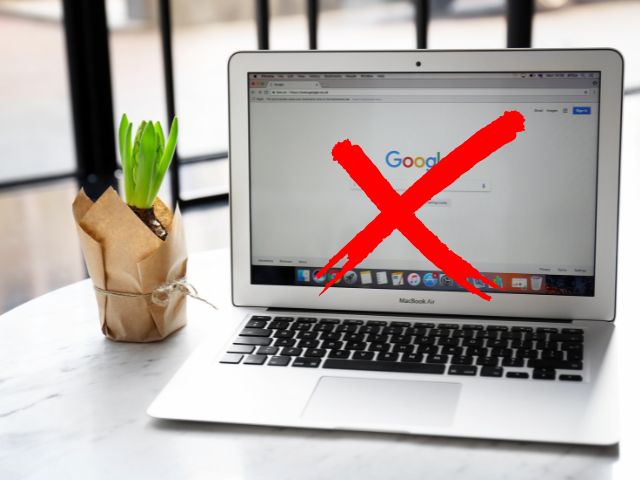
If your business is not showing up on Google, the problem is almost never that Google is unfair. It is almost always that the website is not giving Google what it needs to recommend you. "We have a website but nobody finds it" is the most common sentence we hear from local contractors, roofers, electricians, plumbers, and home service business owners. In most cases, the site is invisible for one of five fixable reasons. Here is exactly what is going wrong, why it matters, and how to fix it.
The 5 Most Common Reasons Your Website Is Not Showing Up on Google
These are the five issues we find in almost every local business website that fails to rank. Work through them in order. The first two are usually the highest-impact.
1. Google does not know where you are
Google is a local search engine for most small businesses. When a customer types “roofer near me” or “emergency plumber in Columbus,” Google does not search the entire web. It searches its local index. That index is built heavily from Google Business Profile data.
If you do not have a Google Business Profile, or if your profile has the wrong hours, no service area, no categories, or a mismatched address, Google cannot confidently match you to local searches. The result is simple: you do not show up for the searches that matter most.
Many business owners assume Google knows where they are because they have a website. That is not true. Google trusts its own verified location data first. If your website says one address, your Facebook says another, and your Google Business Profile says a third, Google has to guess. When Google has to guess, it usually shows someone else.
This is the highest-leverage hour you will ever spend on marketing. A complete profile includes your business name, address, phone number, website link, primary category, secondary categories, service areas, hours, photos, and a description that uses the same words customers type. We have seen a Denver plumber go from almost no map visibility to page one in 30 days after adding 12 service-area suburbs and fixing his primary category. Google Business Profile optimization is not optional. local SEO services include a full profile audit, category cleanup, and monthly posting schedule.
2. Your pages do not say what you do
A homepage headed “Welcome” or “Quality You Can Trust” tells a search engine nothing. Google does not guess. It reads the words on the page and matches them to the words people type into the search bar. If your title tags, headings, and body copy do not contain the exact phrases your customers use, you will not rank for those phrases.
For example, an HVAC company that wants to rank for “air conditioning repair in Mesa” needs a page with that phrase in the title tag, in the first paragraph, in at least one subheading, and naturally throughout the body. The page also needs to answer the questions a real customer would ask: Do you work on my brand? Are you licensed? Do you offer same-day service? How much does a diagnostic cost?
The same rule applies to your title tags. If your homepage title is just the company name, you are hiding your best ranking opportunity. A strong title tag for a local service page follows a simple formula: service + city + business name. That one change can lift a page several positions.
A website that only says “Welcome to our website” is invisible because it never answers the search query. Every service you offer needs a dedicated page, and every page needs to say what you do, who you do it for, and where you do it in plain language. If you are not sure whether your pages are specific enough, search your own service in your own city. If you would not be satisfied with the answer on your page, Google will not be either.
3. The site is too slow on a phone
Most local searches happen on a phone, often while someone is standing in a driveway, outside a broken AC unit, or in a parking lot searching for lunch. If your page takes five seconds to load, most people have already hit the back button. Google knows they bounced. A high bounce rate tells Google that your page did not satisfy the user, and rankings drop.
A slow site also wastes your paid traffic. If you run Google Ads and send someone to a page that takes six seconds to load, you are paying for a click that never converts. Core Web Vitals are now a ranking factor, and mobile speed is a direct part of the local search algorithm.
The most common speed killers are large images, unused scripts, cheap hosting, too many plugins, and third-party code. Images are the biggest offender. A photo from a phone camera can be 3 MB or more. Compressing it to 150 KB or less usually cuts load time by half. Do not skip this because it feels technical. Most website platforms make it a one-click fix. The easiest test is to open your own site on a phone using mobile data. If you would not wait for it, neither will Google.
We worked with a residential electrician in Columbus whose mobile site took 5.8 seconds to load. After compressing images, removing two unused plugins, and switching to a faster host, the load time dropped to 1.9 seconds. Organic calls doubled within 60 days. Speed is not a technical detail. It is a conversion issue.
4. There is only one page
One page can rank for one thing, and even then it is difficult. A local business with five services and ten service areas cannot expect a single homepage to rank for all of them. Google ranks pages, not websites. Each page has one opportunity to be the best answer for one query.
A roofing company should not rely on a single homepage. It should have one page for roof repair, one for roof replacement, one for emergency tarping, one for gutter installation, and a local landing page for each major city in its service area. A pest control company should have pages for ants, termites, rodents, bed bugs, and each suburb it serves.
The key is to make each page genuinely useful. Do not create 20 pages that are identical except for the city name. That is a doorway page strategy, and Google will ignore it. Instead, include local proof on each page: the neighborhoods you serve, the licenses you hold, the local suppliers you work with, and real photos from jobs in that area. This gives Google a reason to show that page for that local search.
Internal links also help. A service page should link to related service pages and to your contact page. This shows Google how your pages connect and keeps visitors moving toward a call. If your website is only a homepage and a contact page, you are leaving almost every local search on the table. A small expansion to eight or ten focused pages can change your entire visibility.
5. Nothing links to you
Directories, suppliers, the local chamber, the trade body you already pay for. Every real mention is a signal that you exist. Google still uses links and citations as a trust signal, especially for local businesses. A mention on a supplier's dealer locator, a chamber member directory, or a local news story tells Google that your business is part of the local economy.
These are not spammy links. They are references from organizations that already know you. Start with the groups you already pay for. Most trade bodies and chambers have member directories that include a link to your website. Then claim profiles on major directories like Yelp, Angi, HomeAdvisor, and any industry-specific directory. Make sure your name, address, and phone number are identical everywhere. Inconsistent NAP data confuses Google and weakens every citation you have.
One often-overlooked source is your own supply chain. If a manufacturer lists approved installers, make sure you are on the list. If a local utility has a contractor locator, get added. If you sponsor a youth team or donate work to a nonprofit, ask for a mention on their website. These are real, local signals that build trust over time. Read our local SEO guide
Do not buy links. Do not join link farms. Those shortcuts can get your site penalized. Local SEO is about earning real mentions from real organizations in your community.
What to Do This Week
You do not need to fix everything at once. Start with the two highest-impact items.
First, claim or repair your Google Business Profile. Add your service areas, choose the correct primary category, and upload 10 real photos. This can start helping within days.
Second, look at your homepage title tag and first paragraph. Do they say exactly what you do and where you do it? If not, rewrite them. Then identify the five service or area pages you should create next.
Third, test your website speed on a phone. If it takes more than three seconds to load, compress your images and remove unused plugins. These three actions will fix the majority of cases we see.
Your Website Can Show Up on Google
Your website is not broken. It is just invisible to Google for specific, fixable reasons. Once you correct the location signals, the page content, the speed, the page structure, and the local links, your site can start showing up for the searches that actually bring customers.
If you want to know exactly which of these five issues is holding your website back, book a free strategy call. We will run a quick visibility audit, check your Google Business Profile, and show you the three highest-impact fixes for your business. No pressure, just a clear plan.